



Career Profile: Marine Biology

ClinLab Solutions Group • July 31, 2024

Share this article

In a world increasingly focused on sustainability and environmental stewardship, marine biology stands out as a popular and aspirational field for high school and college students alike. Driven by a profound passion for oceanic environments and marine life, aspiring marine biologists dive into the study of marine organisms, their behaviors, and their interactions with the environment. The career opportunities in marine biology are diverse and dynamic, ranging from cutting-edge research and conservation efforts to impactful roles in education and applied science.


Core Marine Biology Career Paths:


  • Research Scientist: Focuses on studying marine ecosystems, conducting experiments, and publishing findings. Often employed by universities, research institutions, and government agencies.
  • Marine Conservationist: Works with organizations to protect marine environments, develop conservation strategies, and promote sustainable practices.
  • Marine Educator: Teaches marine biology at high schools, colleges, aquariums, and museums, inspiring the next generation of marine scientists.
  • Aquarist: Manages marine life in aquariums, ensuring the health and well-being of marine species and educating the public.
  • Marine Policy Advisor: Advises on policies related to marine conservation, fisheries management, and environmental protection.


Job Outlook:


The demand for marine biologists is expected to grow as environmental concerns and the need for conservation efforts increase. Job opportunities are available in various sectors, including:


  • Government Agencies: Employ marine biologists for research, policy development, and regulatory roles.
  • Nonprofit Organizations: Focus on conservation, advocacy, and education.
  • Academic Institutions: Offer research and teaching positions.
  • Private Sector: Includes environmental consulting firms and companies focused on sustainable seafood and marine resources.

Skills and Education:


  • Education: A bachelor’s degree in marine biology or a related field is essential. Advanced degrees (master’s or Ph.D.) are often required for research and higher-level positions.
  • Skills: Strong analytical skills, fieldwork experience, proficiency in laboratory techniques, and knowledge of marine ecosystems. Effective communication and teamwork are also crucial.


Challenges and Rewards:


Marine biologists often face challenges such as securing funding for research, working in remote locations, and dealing with the unpredictability of marine environments. However, the rewards include contributing to the understanding and preservation of marine life, engaging in exciting fieldwork, and having the opportunity to travel and explore diverse ecosystems.


Adjacent Job Opportunities:


A degree in marine biology equips graduates with a wide range of skills and knowledge that can be applied to various adjacent jobs beyond traditional marine biology roles. Here are some careers that can benefit from a marine biology background:


  1. Environmental Consultant: Provides expertise on environmental impacts and conservation strategies for businesses and government agencies.
  2. Wildlife Biologist: Studies animals and ecosystems, often focusing on conservation and biodiversity.
  3. Ecologist: Examines ecosystems, including marine and terrestrial environments, to understand the relationships between organisms and their habitats.
  4. Fisheries Biologist: Manages and studies fish populations, advising on sustainable fishing practices and fisheries management.
  5. Marine Engineer: Works on the design and development of marine technology, including vessels, underwater equipment, and offshore structures.
  6. Oceanographer: Studies the physical, chemical, and geological aspects of the ocean, often collaborating with marine biologists on interdisciplinary research.
  7. Hydrologist: Investigates water resources, including the study of ocean currents, tides, and water quality, with applications in environmental protection and resource management.
  8. Aquaculture Specialist: Focuses on the breeding, raising, and harvesting of fish, shellfish, and other aquatic organisms in controlled environments.
  9. Marine Policy Analyst: Analyzes and develops policies related to marine conservation, fisheries management, and marine resource use.
  10. Environmental Educator: Teaches and raises awareness about environmental issues, often through schools, nature centers, and community programs.
  11. Science Communicator: Writes and produces content related to marine science for media outlets, educational materials, and public outreach programs.
  12. Marine Mammal Trainer: Works with marine mammals in settings such as aquariums, zoos, and research facilities, focusing on training, enrichment, and education.
  13. Environmental Lawyer: Specializes in laws and regulations related to environmental protection, including marine conservation and pollution control.
  14. Conservation Scientist: Develops and implements conservation strategies to protect natural resources, including marine ecosystems.
  15. Geospatial Analyst: Uses geographic information systems (GIS) to analyze spatial data related to marine and coastal environments.

Marine biology is more than just a field of study; it is a gateway to a diverse array of career opportunities that leverage scientific training, analytical skills, and a deep understanding of environmental dynamics. Graduates armed with a marine biology degree can step into roles that span scientific research, conservation, education, and policy-making, each offering a chance to make significant contributions to environmental sustainability. These career paths not only fulfill a passion for oceanic life but also play a crucial role in addressing some of the most pressing environmental challenges of our time.

Life Science Talent Where and When You Need It.

We help organizations manage their most critical scientific staffing needs by connecting them with our large, industry-specific talent pool. Whether you are seeking skilled marine biologists, conservation experts, or marine policy advisors, our network ensures that you find the right talent to drive your organization’s success and contribute to the sustainable future of our oceans.

Recent Posts

Staffing firm promo with lab scientists and office team; text reads “Specialized staffing for every stage of development”
By ClinLab Solutions Group August 14, 2025
In the life sciences, every stage from early research to clinical trials and post-approval monitoring runs on a tight schedule. Teams are expected to hit critical milestones while navigating a maze of complex regulations. The challenge is finding specialized talent quickly enough to keep studies moving. A vacant role or a poor hire can cause […] The post How Specialized Staffing Keeps Preclinical, Clinical, and Post-Approval Work on Track appeared first on ClinLab Solutions Group.

Split portrait of a doctor in glasses and a white coat, half casual and half formal suit with stethoscope
By ClinLab Solutions Group August 7, 2025
Drawn to medicine, but not the day-to-day of patient care? Holding an MD opens doors far beyond the exam room. In today’s health-driven economy, companies across industries—from biotech to health tech, pharma, legal, and consulting—are actively seeking professionals with deep medical expertise. An MD isn’t just a credential; it’s a strategic advantage. Your training equips […] The post 5 Alternative Careers for MDs appeared first on ClinLab Solutions Group.

Scientist in a white lab coat taking notes beside a microscope and blue lab glassware
By ClinLab Solutions Group July 30, 2025
How Long Do Scientists Stay in a Job in 2025, and What Does It Mean for Hiring Managers? Science professionals are staying in jobs for shorter periods than ever before. According to the latest U.S. Bureau of Labor Statistics data, median tenure for science roles is down to 3.7 years—and often lower in fast-moving sectors […] The post How Long Scientists Stay in a Job in 2025, and What It Means for Hiring Managers appeared first on ClinLab Solutions Group.

Waterfront city skyline with tall buildings, blue water, and a stone promenade under a cloudy sky
By ClinLab Solutions Group July 16, 2025
Is Your Science Career Stuck? Explore the Pros and Cons of Moving to a Biotech Hub for Lab Professionals, Researchers, and Scientists As a science staffing firm, we talk to candidates every day who ask: Should I move to grow my career in science? It’s a big decision—and the right answer depends on your goals, […] The post Should You Relocate to a Science Hub? appeared first on ClinLab Solutions Group.
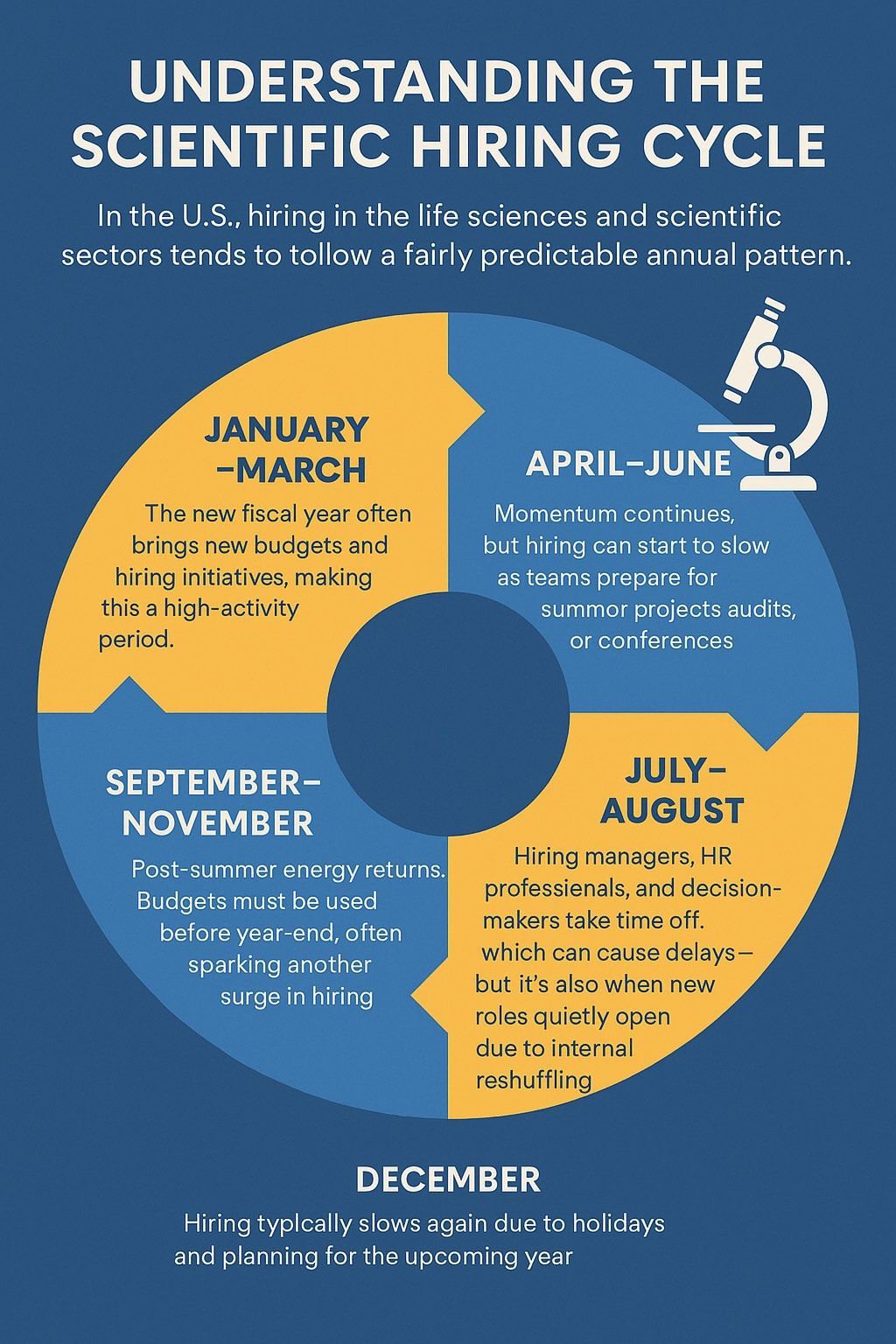
Blue infographic titled “Understanding the Scientific Hiring Cycle” with a four-part circular timeline.
By ClinLab Solutions Group July 9, 2025
Summer might feel like the slow season—vacation mode kicks in, schools are out, and the office AC becomes your best friend—but for job seekers in scientific roles, the warmer months hold strategic opportunities. While the U.S. hiring cycle does have its seasonal rhythms, summer can be a surprisingly smart time to be on the job […] The post What to Expect When Job Hunting This Summer appeared first on ClinLab Solutions Group.

Scientist in lab coat and mask holding an orange liquid flask with a test tube nearby
By ClinLab Solutions Group July 2, 2025
When life science companies need to scale their teams quickly and reliably, they can’t afford to rely on generalist staffing firms. That’s why hundreds of biotech, pharmaceutical, and diagnostics companies across the U.S. turn to ClinLab Staffing—a firm built exclusively for the scientific community. A Specialized Partner in Life Science Talent ClinLab Staffing is not […] The post Why ClinLab Staffing is a Top Choice for Life Science Staffing in the U.S. appeared first on ClinLab Solutions Group.
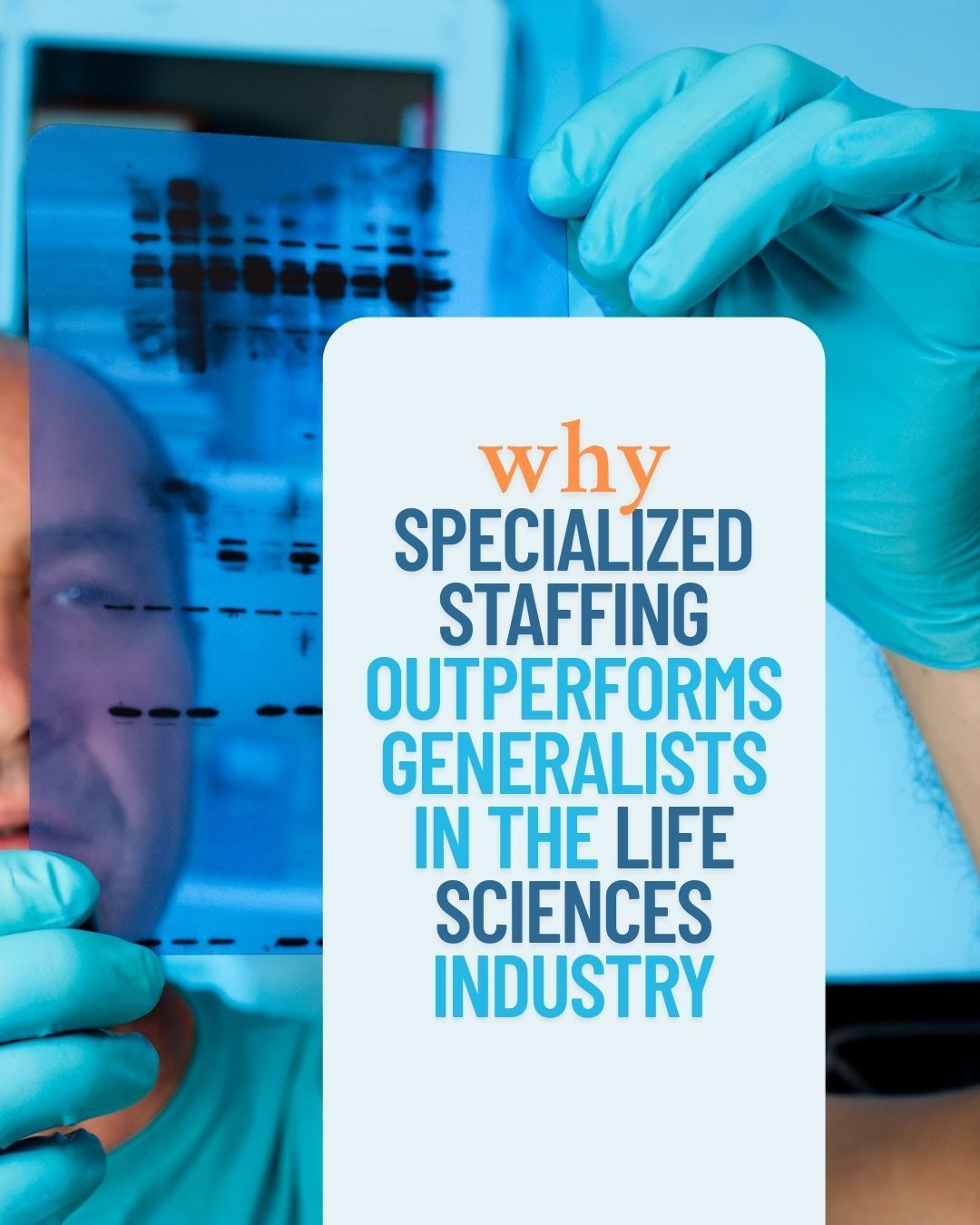
Gloved lab worker holding a sign: “Why specialized staffing outperforms generalists in the life sciences industry.”
By ClinLab Solutions Group June 25, 2025
At ClinLab Staffing, we’ve spent the past two decades embedded in one of the most demanding and fast-paced sectors of the global economy: the life sciences. From startup biotechs in Cambridge to Fortune 100 pharmaceutical companies nationwide, our clients all face the same challenge—finding and retaining highly specialized talent that can deliver under pressure. Increasingly, […] The post Specialized Staffing Outperforms Generalists in the Life Sciences Industry appeared first on ClinLab Solutions Group.

Scientist in a lab holding two test tubes, looking concerned, with blue and orange liquids on the table
By ClinLab Solutions Group June 20, 2025
The Hidden Costs of a Bad Science Hire—And How ClinLab Helps You Avoid Them In scientific research, pharmaceuticals, and biotech, making the right hire isn’t just important—it’s critical. The wrong hire doesn’t just affect productivity; it can jeopardize project timelines, compromise data integrity, and cost far more than just salary. At ClinLab Staffing, we specialize […] The post The Hidden Costs of a Bad Science Hire appeared first on ClinLab Solutions Group.

Medical team gathered around a laptop in a clinical setting, discussing a document with focused expressions
By ClinLab Solutions Group June 12, 2025
In clinical research, trial timelines are everything. A single staffing gap—whether it’s a missing CRA or a delayed project manager—can derail months of planning, costing sponsors money, slowing regulatory progress, and pushing critical therapies farther from the patients who need them. If you’re running or scaling a Clinical Research Organization (CRO), building a team that’s […] The post Clinical Trial Staffing: How to Build a Resilient CRO Team appeared first on ClinLab Solutions Group.

Silhouetted people in a modern lobby at sunset, with bright reflections on the polished floor.
By ClinLab Solutions Group June 4, 2025
June 2025 The hiring landscape in life sciences is evolving, and both employers and job seekers need to adapt. With a growing reliance on virtual interviews, skills-based assessments, and AI-driven screening, the hiring process is becoming more efficient—but face-to-face connections still play a vital role. Companies are balancing speed and precision when selecting candidates, while […] The post Job Interviews Are Evolving – What to Expect appeared first on ClinLab Solutions Group.
Show More